
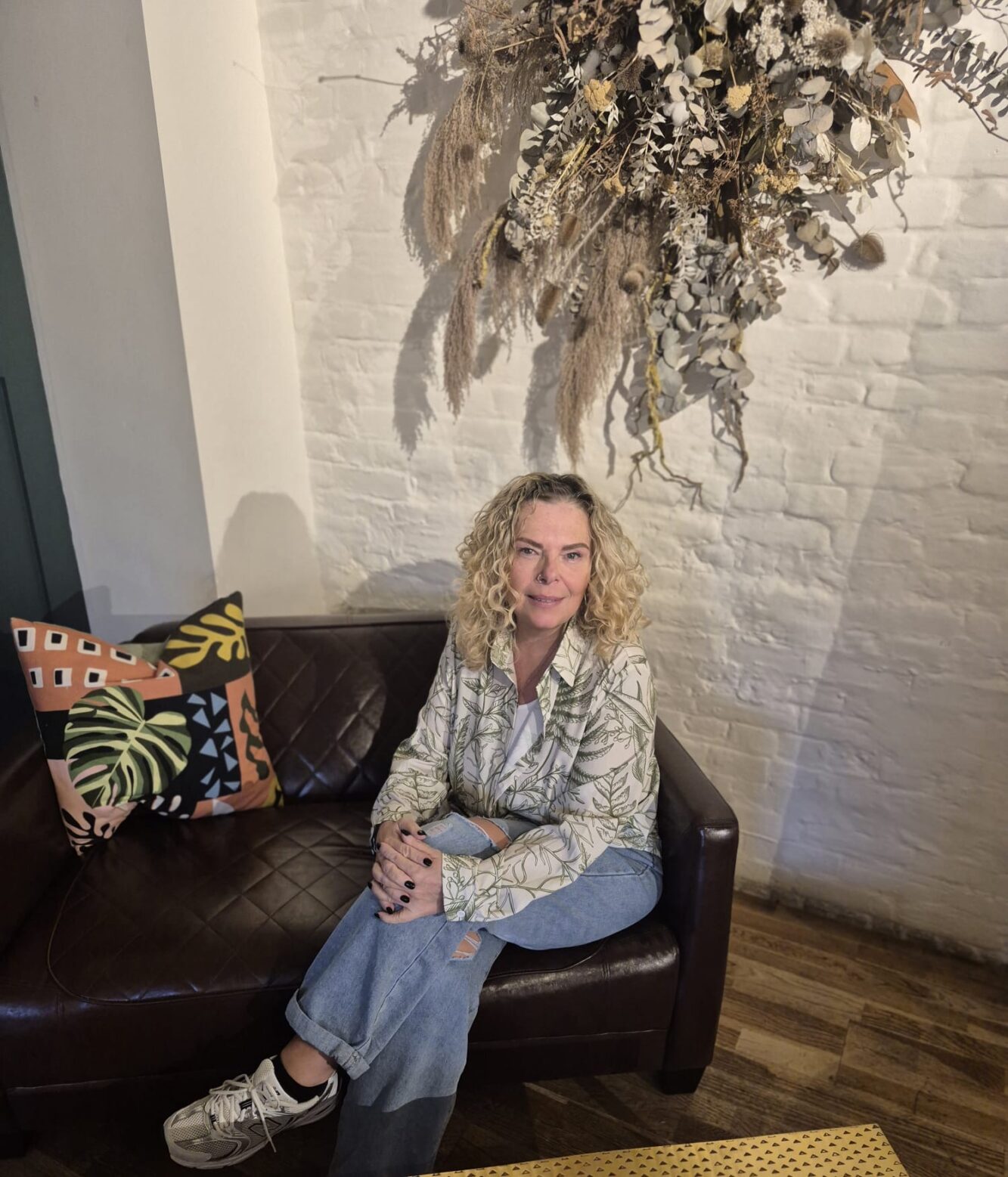
There is a version of me that people see now — calm, grounded, put together. A therapist. Someone with boundaries, direction, and a strong sense of self.
And that version of me is real.
But it isn’t where I started.
I’m aware that when you’re struggling — with addiction, codependency, the aftermath of abuse, or a deep sense of being lost — it can feel as though other people somehow skipped the chaos. As if they arrived at steadiness naturally, while you’re still fighting yourself just to get through the day.
That wasn’t my experience.
I’m not sharing this to shock or impress. I’m sharing it because I know how isolating it is to believe you’re the only one who hasn’t “got it together,” and how hard it can be to trust support when you feel unseen or misunderstood. Or when you have been let down by the people you trusted the most.
The steadiness you see now was built — slowly, imperfectly, and with a lot of support. It came after years of coping in ways that made sense at the time, even when they were hurting me.
This isn’t a before-and-after story.
It’s a story about becoming.
Who I Used to Be (Before I Had the Language)
For a long time, I didn’t think there was anything seriously wrong.
I wasn’t waking up intending to self-destruct. I was constantly explaining things away — mostly to myself. If I drank most nights, it was stress. If I took cocaine at weekends, it was just being social. Nothing I did felt like a “real” problem because I could always find a reason for it.
I even had rules that reassured me. I’d stop drinking on Tuesdays and Wednesdays to reassure myself I didn’t have a problem. But really, I was just waiting for Thursday. Those days off weren’t about care or choice — they were about control, and about keeping the bigger picture out of sight.
The same lack of awareness ran through my relationships.
I thought codependency was something that only showed up romantically, so I didn’t see it in my friendships at all. Every new friend felt like a lifeline. I’d attach quickly, people-please relentlessly, and mould myself around whoever was in front of me. Being liked felt essential. Being left felt unbearable.
In romantic relationships, my world would shrink down to one person. Their needs, moods, and approval mattered more than my own. I didn’t have boundaries because I didn’t really know where I ended and someone else began.
And when those relationships collapsed, everything collapsed with them.
Then came the moment I couldn’t avoid anymore: after years of toxic friendships and abusive relationships, I had had enough. When I was alone, I didn’t know who I was. Without someone to attach to, there was no steady sense of self underneath — just fear, shame, and a feeling of being completely unanchored in my own life.
Understanding Came Slowly
None of this became clear all at once.
There wasn’t a single moment of insight where everything suddenly made sense. What came instead was a long, uneven process of noticing, understanding, and then noticing again — often in deeper and more uncomfortable ways.
At first, I could only see the obvious things: the drinking, the drugs, the chaos in relationships. It took much longer to understand why they were there, and even longer to stop judging myself for them. Each layer I uncovered seemed to reveal another one underneath.
Healing hasn’t been linear for me. It’s been more like peeling an onion — removing layers slowly, sometimes feeling relief, sometimes grief, and sometimes realising I wasn’t finished with a layer I thought I’d already worked through.
Understanding my codependency didn’t immediately stop me people-pleasing. Recognising my inner child didn’t suddenly make me feel safe. Awareness came first; change followed much more slowly.
Even now, I know there are still layers. Not in a way that feels hopeless — but in a way that feels honest.
What shifted over time wasn’t that I became “fixed,” but that I became more compassionate. I stopped seeing my patterns as proof of failure and started seeing them as information — parts of me that had been trying, clumsily but earnestly, to keep me connected and protected.
That understanding didn’t erase the past. But it changed my relationship to it — and, slowly, my relationship to myself.
What Therapy Gave Me
Therapy didn’t give me a new personality, and it didn’t hand me a neat explanation that suddenly made life easy. What it gave me, slowly and over time, was understanding — and then choice.
Through therapy, I began to see patterns rather than just problems. I started to understand how much of my behaviour was driven by parts of me that had learned very early on how to survive — by attaching, pleasing, numbing, or disappearing. What I’d once judged as weakness began to make sense as protection. I realised that patterns that had kept me safe in childhood, not only no longer served me in adulthood, but could actually harm me.
One of the most important shifts was learning about my inner child — not as a concept, but as lived experience. I began to recognise when younger parts of me were running the show: the part that panicked at being alone, the part that felt responsible for other people’s feelings, the part that believed love had to be earned.
Therapy helped me slow those moments down, notice them, and respond differently rather than automatically acting them out.
Boundaries were another huge piece. Not just learning how to say no, but understanding why it had felt so impossible in the first place. I learned that boundaries weren’t about pushing people away — they were about protecting a self I was only just beginning to know.
Over time, therapy helped me step out of victim mode, not by blaming me for what had happened, but by helping me reconnect with my own agency. I began to feel more anchored inside myself. Less reactive. Less driven by fear. More able to tolerate discomfort without immediately trying to escape it.
None of this happened quickly. And none of it happened alone.
Where I Am Now — Not Finished, Just Different
What changed didn’t look dramatic from the outside. It looked like a series of quieter, often uncomfortable choices made over time.
I began to notice how people and environments made me feel. Instead of worrying whether someone liked me, I started paying attention to whether I felt anxious, small, or on edge around them. That awareness led to some painful realisations — including the fact that not everyone in my life was safe for me, even if I cared about them.
Stepping back from certain relationships wasn’t about blame or punishment. It was about learning to protect a nervous system that had spent years in survival mode.
I also had to learn how to be on my own without immediately filling the space. For someone whose sense of self had been built around attachment and approval, that was deeply uncomfortable. But over time, being alone stopped feeling like abandonment and started to feel like contact — with myself, my needs, and my boundaries.
I became more curious about my urges rather than acting on them. Instead of automatically numbing, pleasing, or escaping, I learned to pause and ask what part of me was activated and what it might need.
I still have patterns. I still notice old parts of me wanting to take over when I’m tired, or stressed. The difference now is that I recognise them. I have choices where I once had compulsion. I have boundaries where I once had none. And I have a relationship with myself that doesn’t collapse when someone else leaves or disappoints me.
I’m not at the end of the journey — and I don’t believe there is an end point. But I am in a very different place to where I started. One that feels steadier, kinder, and far more my own.
Why This Matters for You
If any of this feels familiar, I want you to know this: you’re not weak, broken, or behind.
The patterns you may be living with now — the numbing, the people-pleasing, the self-doubt, the feeling of being lost in other people — are not signs that something is wrong with you. They’re signs that parts of you learned how to survive without enough safety or support.
Change doesn’t start with willpower. It starts with understanding, compassion, and being met rather than judged.
Because of my own journey — and the work I now do with others — I’m creating something I wish I’d had earlier on.
In June, I’ll be launching an online, self-paced course called:
Coming Home to Yourself
A Gentle Guide to Inner Child Healing and Self-Worth After Abuse

It’s designed for people who want to begin this work at home, in their own time — especially those who know that early experiences still shape how they relate to themselves and others. It isn’t about fixing yourself or rushing toward an “after.” It’s about learning how to understand your inner world and respond to yourself with more safety and care.
Whether or not that’s the right fit for you, I want you to know this: support exists. Change is possible. And you don’t have to have everything figured out to begin.
Sometimes the bravest thing we can do is stop running from ourselves — and start coming home, gently, one step at a time.
Andrea, x