
Addiction recovery is rarely a straight line. For many people, change happens gradually, with moments of clarity, hesitation, courage, and sometimes relapse. The Stages of Change model — also known as the Transtheoretical Model— helps us understand this process in a way that is gentle, realistic, and deeply human.
If you or someone you love is navigating addiction, understanding these stages can remove shame, reduce pressure, and highlight what support is actually needed at each step.
As a trauma and addiction therapist supporting clients across Romford, and Havering, I use this model often because it honours the complexity of recovery and makes space for real, sustainable change.
What Are the Stages of Change?
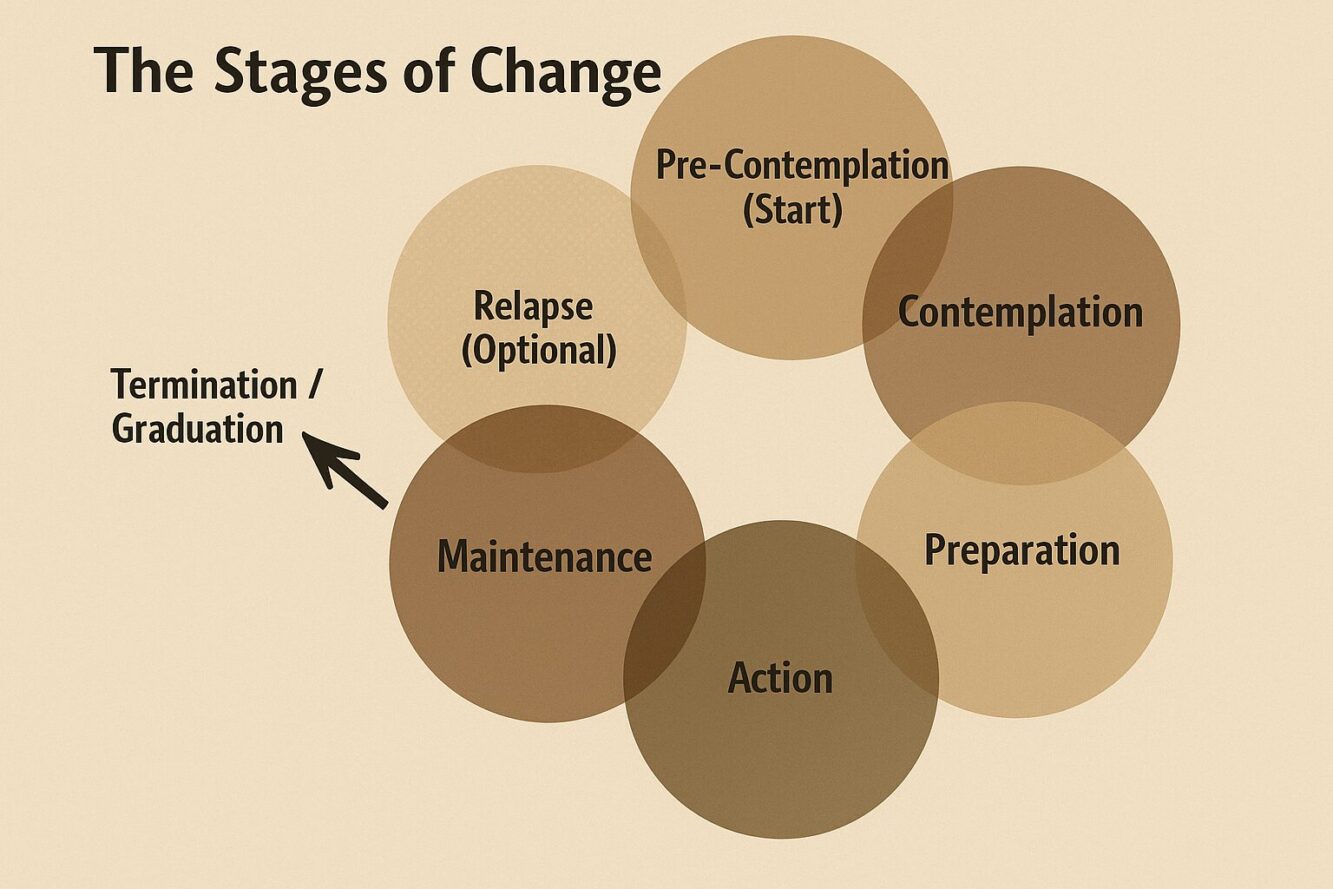
The Stages of Change model outlines six phases people typically move through when changing a behaviour such as alcohol or drug use, gambling, compulsive relationships, or any other addiction. These stages overlap, repeat, and circle back — because healing is not linear.
Below, you’ll find an explanation of each stage and what support looks like within it.
1. Pre-Contemplation: “I don’t have a problem.”
In this early stage, a person may not see their behaviour as harmful. They might minimise the impact, feel defensive, or believe change is impossible. This isn’t resistance — it’s protection.
What helps at this stage:
-
Gentle, non-judgemental conversations
-
Raising awareness without pushing change
-
Exploring how life could feel with more safety, stability, and freedom
2. Contemplation: “Part of me wants to change… but I’m scared.”
Ambivalence is the hallmark of this stage. A person can see the pros and cons of stopping but feels unsure, frightened, or overwhelmed.
Support looks like:
-
Validating the fear of change
-
Exploring motivations: health, relationships, identity
-
Understanding what’s at stake emotionally (often linked to trauma or unmet needs)
This is often where therapy begins, as the person becomes curious about what recovery might look like for them.
3. Preparation: “I want to change — what do I do next?”
Here, the person begins taking small steps such as researching therapy, cutting down, talking to loved ones, or planning a detox.
Helpful support includes:
-
Creating a realistic, personalised recovery plan
-
Identifying triggers and emotional drivers
-
Building a support network
This stage is about getting ready — not perfection.
4. Action: “I’m making the change.”
The person has begun actively changing their behaviour. This may involve:
-
Attending therapy
-
Detoxing or reducing use
-
Joining support groups
-
Setting boundaries in relationships
-
Replacing addictive coping strategies with healthier ones
This stage requires energy, courage, and emotional support — and it’s where relapse risk can naturally increase.
Therapy helps by:
-
Supporting emotional regulation
-
Addressing trauma that previously fuelled the addiction
-
Strengthening coping strategies
5. Maintenance: “I want to stay on track.”
Once the initial change has happened, the focus shifts to maintaining progress. This stage can last months or years.
Maintenance involves:
-
Recognising triggers early
-
Building resilience
-
Keeping support structures in place
-
Cultivating new habits and relationships that support sobriety
It’s normal for people to cycle back into earlier stages at times. Maintenance isn’t about never slipping — it’s about recovering more quickly when you do.
6. Relapse: A Common, Not Shameful, Part of Change
The model shows relapse as “optional” because not everyone experiences it — but many do. Relapse is not failure. It is information.
Relapse offers insight into:
-
Unmet needs
-
Emotional overwhelm
-
Situations or relationships that feel unsafe
-
Trauma responses that haven’t yet healed
In therapy, we treat relapse with compassion. It’s a moment to understand the deeper pain beneath the behaviour and strengthen support for the next stage.
7. Termination / Graduation: “I trust myself now.”
In some cases, a person eventually reaches a point where the addiction no longer feels like a threat. They feel grounded, confident, and connected to a healthier identity.
Not everyone uses the word “termination” — for many, recovery is an ongoing journey — but this stage represents emotional freedom and integration.
Why the Stages of Change Matter in Addiction Recovery
Understanding these stages helps remove shame and pressure from recovery. It creates space to:
-
Honour the emotional reasons behind addictive behaviours
-
Support change at the right pace
-
Recognise relapse as part of learning
-
Build a compassionate, trauma-informed foundation for long-term change
Most importantly, it reminds people that they are not failing if they move forward and backward. They are human, healing, and growing.
How Therapy Can Support You Through the Stages of Change
As a trauma and addiction therapist in Romford, and Havering, I work with people at every stage — including those who don’t feel ready yet.
Therapy can help you:
-
Understand the emotional root of the addiction
-
Break the cycle of shame
-
Build healthier coping strategies
-
Strengthen your sense of self and safety
-
Recover at your own pace, without judgement
If you or someone you love is struggling with addiction, you don’t have to navigate it alone.
You’re welcome to reach out for support or book an initial session — a small, brave step toward lasting change.
Take Care Of You,
Andrea, x