
Helping, Rescuing, or Enabling? Understanding the Difference

helping-rescuing-or-enabling.alt

Have you ever found yourself constantly stepping in to solve someone else’s problems? Perhaps you lend money they never repay, make excuses for their behaviour, or put your own needs on hold to keep them afloat. If so, you’re not alone. Many people who struggle with codependency genuinely believe they’re being caring and supportive. But …

Understanding the Nervous System and the Window of Tolerance

Understanding the Nervous System and the Window of Tolerance.alt

If you have ever wondered why some days you can cope with stress quite well, while on other days even a small comment, disagreement, or unexpected change feels overwhelming, your nervous system may hold the answer. The nervous system and the “window of tolerance” are deeply connected. Understanding this can help us make more sense …

When Addiction Becomes Entertainment: Why Public Shaming Misses the Point

When Addiction Becomes Entertainment.alt

Every time a photo of Daniella Westbrook circulates in the media, the response is depressingly predictable. Comment sections quickly fill with ridicule, mockery, and cheap jokes about her appearance. What’s often missing from these conversations is something basic, yet vital: perspective. Addiction is not a punchline. It is not a personality flaw. And it is …

DEAR MAN: A Trauma-Informed Guide to Asking for What You Need

DEAR-MAN-A-Trauma-Informed-Guide-to-Asking-for-What-You-Need.alt

Many people I work with struggle to ask for what they need. They worry about being too much, causing conflict, or being rejected. For people with trauma histories, addiction, or codependent patterns, this fear often comes from past experiences where needs were ignored, punished, or used against them. DEAR MAN is a practical communication tool …

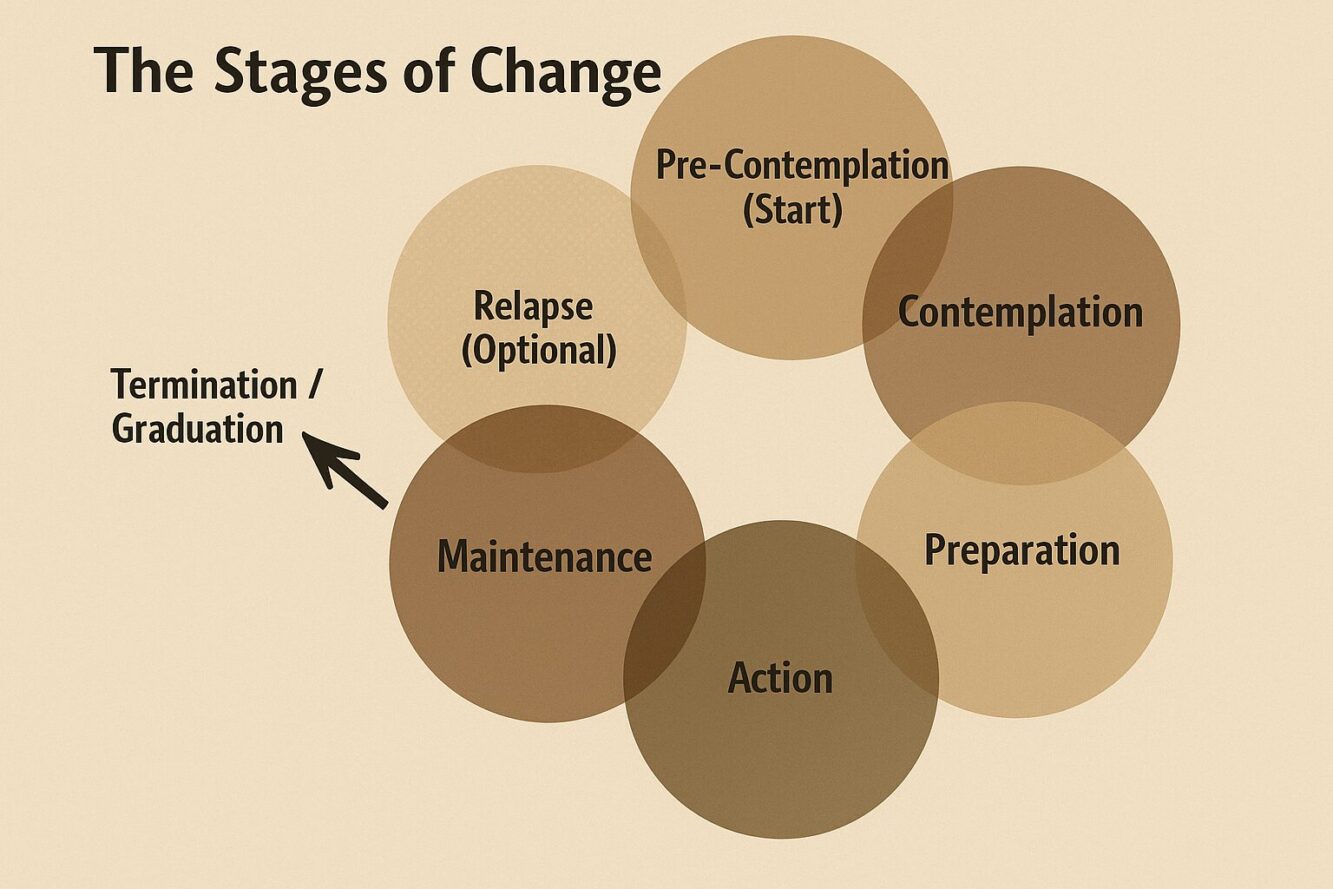
The Stages of Change in Addiction Recovery: A Compassionate Guide for Anyone Seeking Freedom

The Stages of Change in Addiction Recovery.alt

Addiction recovery is rarely a straight line. For many people, change happens gradually, with moments of clarity, hesitation, courage, and sometimes relapse. The Stages of Change model — also known as the Transtheoretical Model— helps us understand this process in a way that is gentle, realistic, and deeply human. If you or someone you love …

Why You Can’t Control His Addiction — And How to Support Real Change

Why-You-Cant-Control-His-Addiction-—-And-How-to-Support-Real-Change.alt

Supporting a partner who is caught in addiction can be heartbreaking, frightening, and deeply exhausting.When you’ve heard “I’ll change” again and again—yet nothing shifts—it’s completely understandable that you might reach for punishment, ultimatums, or control. Not because you’re trying to be harsh, but because you’re hurting and desperate for things to get better. Many partners …

Why Do Some People Confuse Pity or Sympathy With Love?

Why-Do-Some-People-Confuse-Pity-or-Sympathy-With-Love.alt

Understanding the difference — and how it shapes relationships affected by trauma, addiction, and codependency When you care deeply about someone who’s struggling — whether with addiction, trauma, or emotional instability — it’s natural to want to help. But sometimes, feeling sorry for someone can become tangled up with romantic or emotional attachment. Many people …