
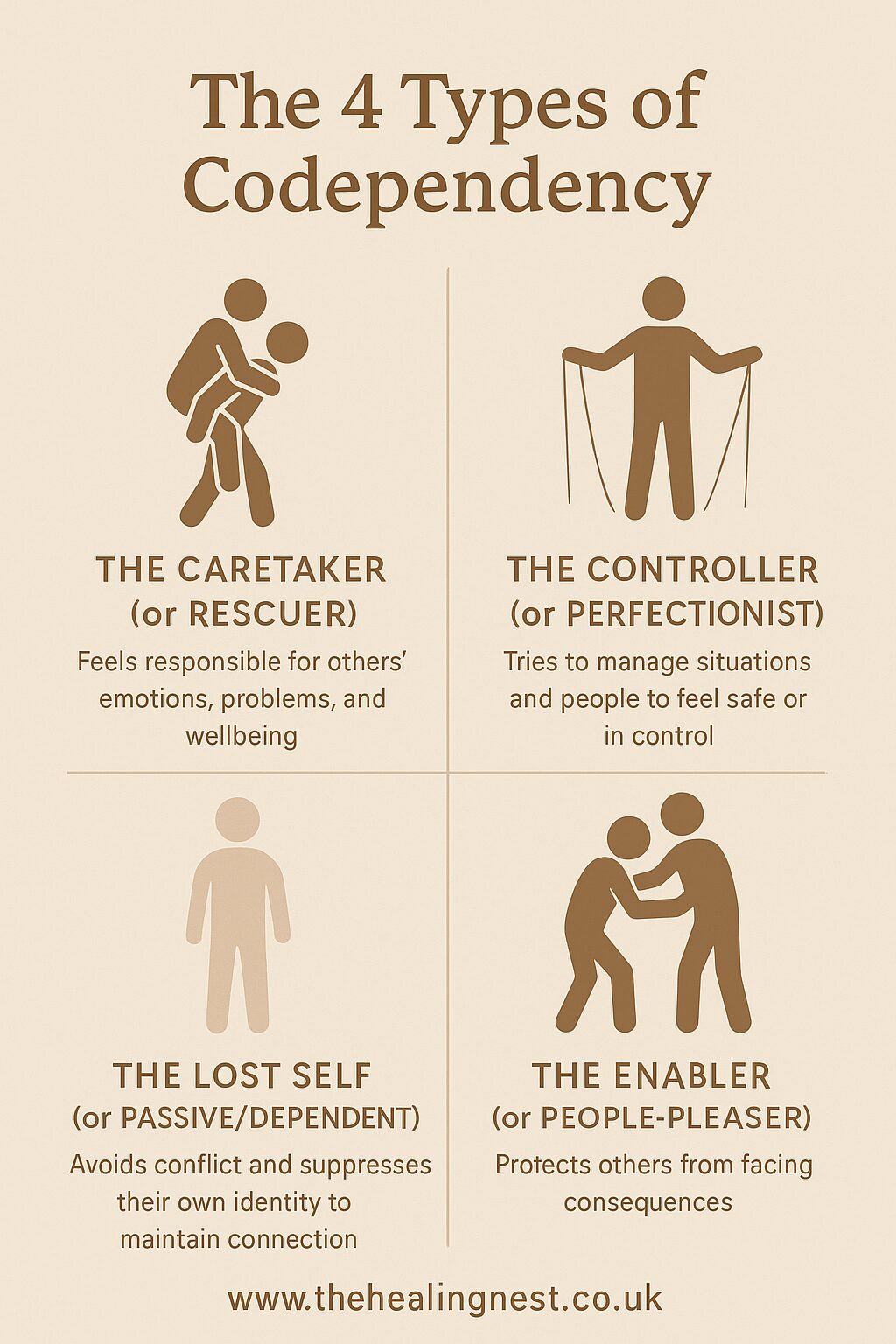
Codependency is a word that gets used a lot, but it can be hard to fully understand. At its core, codependency is about losing yourself in relationships – whether that’s with a partner, family member, or friend. People who struggle with codependency often put others’ needs before their own, feel responsible for other people’s emotions, and find it difficult to set healthy boundaries.
But codependency doesn’t look the same for everyone. In fact, therapists often talk about four main types of codependency. Recognising yourself in one (or more) of these types can be the first step towards change and healing.
1. The Caretaker (or Rescuer)
Caretakers feel most comfortable when they’re looking after others. They may go out of their way to solve problems, give advice, or “fix” situations. Deep down, their self-worth often comes from being needed.
-
Strengths: compassionate, reliable, supportive
-
Challenges: neglecting their own needs, feeling resentful or burnt out
-
Example: someone who always steps in to smooth over family conflicts, even when it causes them stress
2. The Controller (or Perfectionist)
Controllers try to manage people and situations so they feel safe. This can look like taking charge, micromanaging, or trying to make everything “just right.” Underneath, there’s usually anxiety about unpredictability and fear of losing control.
-
Strengths: organised, responsible, proactive
-
Challenges: difficulty trusting others, creating tension in relationships
-
Example: a partner who tries to control their loved one’s drinking or choices, believing it will “save” them
3. The Lost Self (or Passive/Dependent)
The Lost Self struggles to know who they are outside of relationships. They often avoid conflict, hide their true feelings, and rely on others for decisions and validation. Their identity becomes blurred with the people around them.
-
Strengths: cooperative, flexible, easy-going
-
Challenges: low self-esteem, fear of rejection, difficulty expressing needs
-
Example: someone who always says “yes” to keep the peace, even when they’re unhappy
4. The Enabler (or People-Pleaser)
Enablers protect others from the consequences of their actions – often unintentionally. They might cover up, make excuses, or financially support a loved one’s unhealthy behaviour. While their intention is to help, this often keeps destructive patterns going.
-
Strengths: loyal, generous, forgiving
-
Challenges: denying or minimising problems, taking on too much responsibility
-
Example: a parent who pays off their child’s debts caused by addiction, instead of allowing them to face the results
Why Understanding the Types Matters
Many people move between these roles depending on the relationship or life stage. You might recognise yourself in more than one type. The important thing is not to judge yourself, but to notice the patterns and begin to ask:
-
Where did I learn this role?
-
Is it serving me?
-
How is it hurting me?
-
What would a healthier alternative look like?
Awareness is the first step toward breaking free from codependency. With support, it is possible to build stronger boundaries, rediscover your identity, and create healthier relationships.
Getting Support for Codependency
If you recognise yourself in these patterns, you are not alone. Many people who grew up in difficult or unpredictable environments develop codependency as a way to cope.
As a trauma psychotherapist based in Romford, I specialise in helping people heal from codependency, addiction, and unhealthy relationship dynamics. Together, we can explore your patterns, understand where they came from, and build a more balanced way of relating to others.
Get in touch today to book a session and take your first step towards healthier, more fulfilling relationships.
Andrea, x