

If you find yourself reacting strongly in situations that don’t seem to warrant it — snapping at small frustrations, shutting down in conversations, feeling overwhelmed by tone, pressure, or conflict — there’s a good chance this isn’t about your personality or self-control.
It’s about your nervous system.
Stress doesn’t just affect your thoughts.
It changes how your body and brain respond to the world around you.
When you’ve lived through trauma, chronic stress, neglect, addiction environments, or long periods of emotional insecurity, your nervous system learns to stay on high alert. It becomes exceptionally good at detecting threat — even when danger isn’t actually present anymore.
So when something feels tense, demanding, or unpredictable, your body may react before you’ve had time to think.
What’s Actually Happening Inside You When You Get Triggered
When your brain perceives threat — and “threat” can mean pressure, criticism, raised voices, uncertainty, or feeling misunderstood — a small structure called the amygdala sends out an alarm.
This alarm activates your stress response system. Adrenaline surges. Cortisol follows. Your heart rate increases. Your muscles tense. Your breathing becomes shallow.
Your body is preparing to fight, flight, freeze, or fawn.
This response evolved to protect you from danger. But it doesn’t distinguish between physical threat and emotional stress. To your nervous system, a hostile tone or a familiar dynamic can feel just as dangerous as something tangible.
If this alarm has been triggered repeatedly across your life, the system itself begins to change:
The parts of your brain responsible for reflection and emotional regulation struggle to stay online under stress
Memory loses its sense of time, so past danger can feel like it’s happening now
Your threat detection system becomes more reactive and quicker to fire
That’s why your reactions may feel automatic, intense, or out of proportion — and why logic often arrives too late to stop them.
Why Reactivity Can Feel Uncontrollable
People often describe this experience as:
“I go from zero to overwhelmed instantly”
“I know I’m overreacting, but I can’t stop”
“My body reacts before my brain catches up”
“Afterwards, I feel embarrassed, ashamed, or confused”
This isn’t a lack of insight or maturity.
When trauma or prolonged stress has shaped your nervous system, your capacity to regulate emotion is genuinely compromised under pressure. The parts of the brain that normally help you pause, assess, and choose a response are temporarily overridden by survival mechanisms.
In those moments, your body is responding to old learning, not the current situation.
Seven Trauma-Informed Ways to Reduce Reactivity
These are NOT “calm down” techniques.
They are ways to help your nervous system feel safe enough to stand down.
1. Learn to notice early warning signs
Heat in your chest, jaw tension, shallow breathing, racing thoughts — these are cues to intervene before reactivity takes over.
2. Pause without judging yourself
Stepping away to regulate isn’t avoidance. It’s how you interrupt survival mode.
3. Ground through the body, not the mind
Touch something textured. Press your feet into the floor. Name five things you can see. Regulation happens through sensation, not reasoning.
4. Slow your breathing on the exhale
Longer exhales stimulate the vagus nerve and signal safety to your body.
5. Reduce stimulation when possible
Noise, screens, multitasking, and constant demand keep your nervous system activated. Less input equals more capacity.
6. Revisit situations after regulation
Reflection only works once your body has settled. Insight without regulation often leads to shame.
7. Respect your limits
You are allowed to say, “I need a moment,” or “I can’t deal with this right now.” That’s self-regulation, not failure.
Why This Approach Works
When you pause, ground, or regulate your breathing, you’re helping your nervous system shift out of survival mode.
Stress hormones begin to drop. The brain areas responsible for emotional regulation and perspective come back online. You regain access to choice.
In trauma-informed work, this is known as regulation before reflection — because no amount of insight can override a nervous system that believes it’s under threat.
A compassionate reminder
If you’re highly reactive, it doesn’t mean you’re broken, volatile, or difficult.
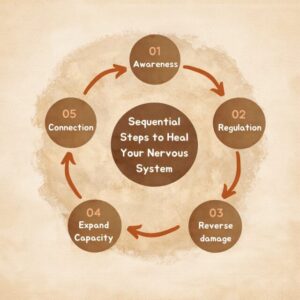
It means your nervous system learned something important about staying safe — and it hasn’t yet learned that things can be different now.
That learning is possible. And it doesn’t start with forcing yourself to be calmer.
It starts with safety.
Andrea, x