
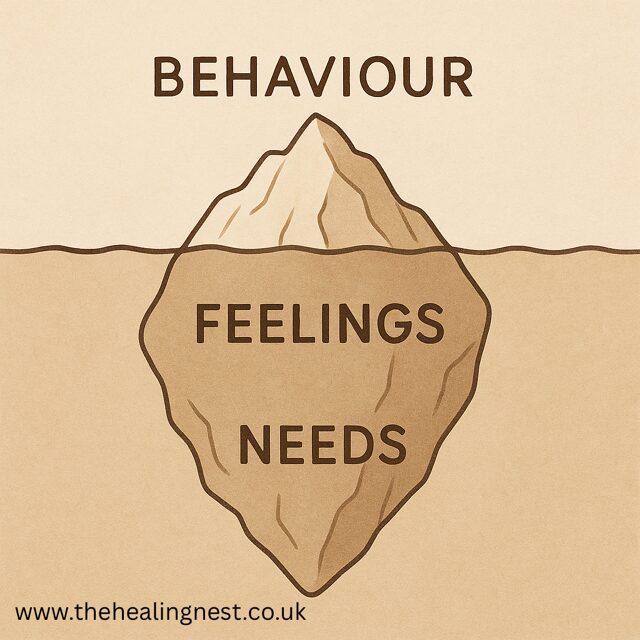
When someone we love behaves in a way that confuses, angers, hurts, or frustrates us, it’s natural to jump to conclusions. We label people as dramatic, attention-seeking, promiscuous, needy, lazy, or difficult.
But these labels only tell us what we see. They reveal nothing about what is happening inside.
If we look beneath the behaviour, we will find a feeling. And beneath that feeling, there is almost always a need.
When we bring curiosity instead of judgement, we create the conditions for understanding, healing, and connection. This is true whether we’re supporting a partner struggling with addiction, trying to understand a parent with trauma patterns, or navigating the complex emotions of raising children.
In my therapy work in Romford, this idea comes up every single day:
Nobody behaves “badly” for no reason. Every behaviour has a story.
Why Curiosity Matters More Than Judgement
Judgement shuts people down.
Curiosity opens people up.
When we judge someone, we operate from assumption. We stay on the surface.
But curiosity says:
-
“I wonder what this means….”
-
“I wonder what they’re feeling….”
-
“I wonder what they need….”
Curiosity makes room for empathy — and empathy makes change safer.
If someone feels judged, they hide.
If someone feels understood, they soften.
This is the foundation of healing trauma, addiction recovery, and rebuilding trust in relationships.
Looking Beneath the Surface: Real Examples
1. When we label someone as “promiscuous”…
We might see someone who has multiple partners or seeks validation through sex and think:
-
“She’s wild.”
-
“She’s reckless.”
-
“She’s desperate.”
But what if instead we asked:
-
Is she longing for love or belonging?
-
Is she trying to soothe abandonment wounds?
-
Is she angry and trying to reclaim power?
-
Is she trying to feel valued, even for a moment?
The behaviour is the strategy.
The feeling is the driver.
The need underneath might be connection, safety, reassurance, or self-worth.
People who grew up with emotional neglect, trauma, or inconsistent care often search for the love they never received — sometimes in ways that are misunderstood.
2. When someone seems “needy” or “clingy”…
It’s easy to judge someone who texts repeatedly, asks for reassurance, or becomes upset when plans change.
But instead of assuming they’re “too much,” we might pause and ask:
-
Are they scared of being abandoned?
-
Are they reliving old wounds of being ignored or dismissed?
We are only “needy” when our needs aren’t being met.
Neediness isn’t a personality flaw — it’s a signal. A sign that someone is longing for connection, safety, consistency, or belonging. Their behaviour is the communication. The need is underneath, waiting to be understood.
3. When anger shows up…
Anger is one of the most judged emotions — especially in women.
Yet anger is almost always a secondary emotion.
Beneath anger you might find:
-
hurt
-
fear
-
betrayal
-
overwhelm
The need beneath might be protection, boundaries, safety, or respect.
If instead of judging the anger we explore the pain underneath, compassion replaces frustration.
Applying Curiosity to Our Children: They’re Not Trying to Wind You Up
Children, like adults, communicate through behaviour.
They don’t have the emotional language or brain development to say what they feel — so they show it instead.
When a child:
-
throws a tantrum
-
hits their sibling
-
refuses to get dressed
-
cries at the smallest thing
-
talks back
-
becomes clingy
-
gets withdrawn or quiet
…they’re not trying to annoy you. They’re communicating.
Instead of thinking:
“Why is he being so difficult?”
Try asking:
“What does he need right now?”
Common underlying needs for children include:
-
connection
-
reassurance
-
predictability
-
sensory regulation
-
rest
-
attention (which is not the same as spoiling)
-
help with overwhelming feelings
A child who “acts out” is a child who needs help, not punishment.
When we meet their need, the behaviour often settles on its own.
The Link to Trauma, Addiction, and Codependency
For adults, behaviours like:
-
drinking
-
using substances
-
fixing
-
withdrawing
-
controlling
-
overspending
-
working excessively
-
rescuing
-
emotional outbursts
…are often coping strategies developed long before adulthood.
They once served a purpose — usually survival.
Curiosity helps us understand:
-
What pain is being numbed?
-
What fear is being soothed?
-
What need is unmet?
This is crucial in families affected by addiction or codependency.
Judgement creates shame — and shame fuels the cycle.
Curiosity creates safety — and safety supports change.
How to Start Practising Curiosity Today
Here are simple reflection steps you can use with yourself or someone you care about:
1. Pause before reacting
Take a breath. Step back. Slow down the judgement.
2. Ask yourself: “What might this person be feeling?”
Even if you don’t know, guessing with compassion helps.
3. Then ask: “What might they need?”
The need is the root.
4. Keep your body language soft
Your non-verbal cues often matter more than your words.
5. Remember that behaviour is communication
Not defiance. Not disrespect. Not manipulation.
Communication.
When You Need Support
If you’re struggling with a loved one’s behaviour — or your own — you don’t have to navigate it alone.
Working with a trauma-informed therapist can help you understand the patterns, the feelings, and the needs underneath.
I support individuals and families across Romford, and the wider Havering area, especially those affected by trauma, addiction, and codependency.
If you’re curious to explore this more, you might find these helpful:
And when you’re ready, you can reach out for therapy support.
Andrea, x