When a Child Becomes the Caregiver: Healing the Parentified Child

when-a-child-becomes-a-caregiver.alt

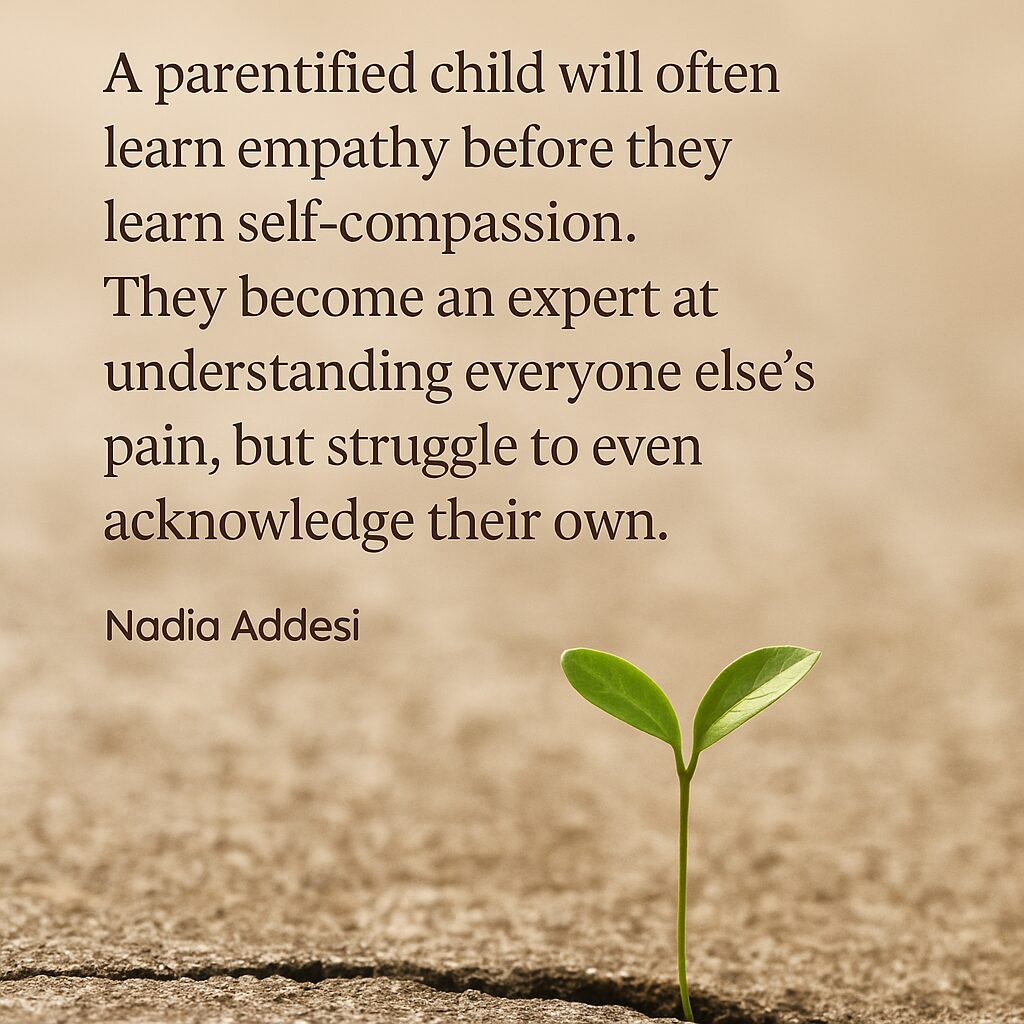
“A parentified child will often learn empathy before they learn self-compassion.They become an expert at understanding everyone else’s pain, but struggle to even acknowledge their own.”— Nadia Addesi When a child is placed in the position of caring for a parent emotionally, they don’t just grow up faster — they grow around the needs of …

When Your Parents Never Said “I Love You” — Understanding the Impact and Finding Healing

when-your-parents-never-said-i-love-you.alt

When love was shown but never said Many of us grew up knowing our parents loved us in practical ways — they provided food, shelter, and perhaps stability — yet they never said “I love you.” That silence can leave a quiet ache. As a trauma therapist working with people in addiction, recovery and codependency, …

Why Do I Always Feel the Need to ‘Rescue’? Understanding Childhood Trauma and Codependency

Why-Do-I-Always-Feel-the-Need-to-‘Rescue.alt

Many people who struggle with codependent behaviours describe a constant urge to rescue, fix, or manage others. If this sounds familiar, it’s important to know: these patterns are not a personal flaw. They are learned survival strategies developed in response to early emotional experiences. Understanding how childhood trauma shapes codependency is the first step toward …

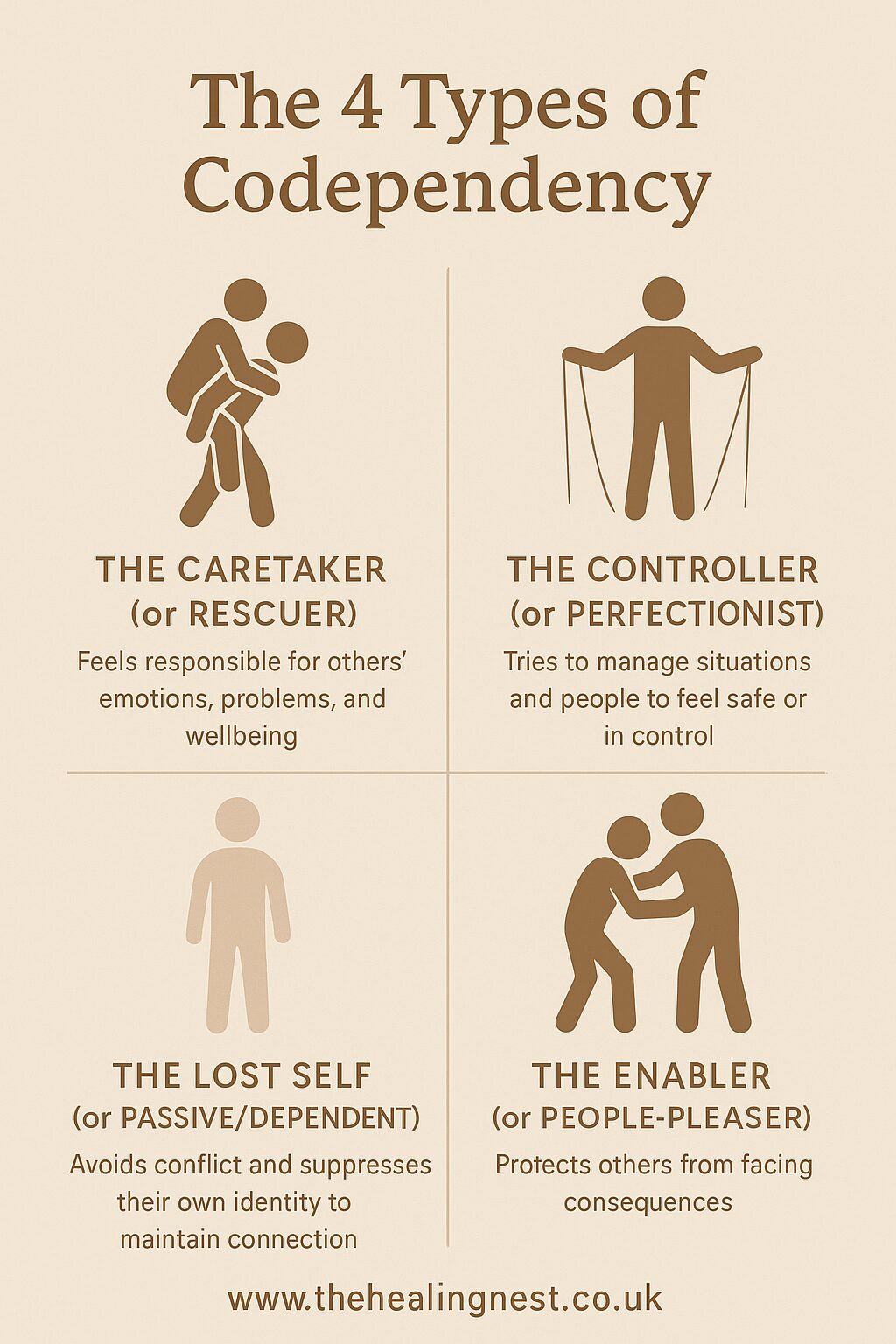
The 4 Types of Codependency: Which One Do You Recognise?

The-4-Types-of-Codependency.alt

Codependency is a word that gets used a lot, but it can be hard to fully understand. At its core, codependency is about losing yourself in relationships – whether that’s with a partner, family member, or friend. People who struggle with codependency often put others’ needs before their own, feel responsible for other people’s emotions, …

Family Roles in Dysfunctional Families: How They Shape Us in Adulthood

Family Roles in Dysfunctional Families: How They Shape Us in Adulthood.alt

In families affected by trauma, addiction, or unresolved conflict, children often take on certain roles as a way to survive. These roles—sometimes called “the golden child,” “the scapegoat,” “the mascot,” and more—are coping strategies children develop to make sense of a chaotic environment. It’s important to know that these roles aren’t fixed. Many children take …

Trauma Bonds vs Healthy Bonds: How to Tell the Difference

trauma-bonds-vs-healthy-bonds.alt

Relationships have the power to heal, comfort, and inspire growth. But when they are shaped by unresolved trauma, they can also trap us in cycles of pain, confusion, and dependency. Many people confuse trauma bonds with love, believing that intensity and emotional highs and lows are proof of a “deep connection.” In reality, what may …

Why Do We Ignore Red Flags in New Relationships? Understanding Limerence and Attachment

why-we-ignore-red-flags-in-new-relationships.alt

Have you ever met someone new and felt an instant spark? Maybe holding their hand feels electric, or you’re convinced you’ve known them your whole life. At the same time, you notice red flags — but somehow, those concerns get pushed aside. If this sounds familiar, you may be experiencing limerence: an intense emotional state …

Understanding the Drama Triangle: Breaking Free from Toxic Relationship Patterns

Understanding the Drama Triangle.alt

Relationships can bring us joy, support, and connection. But when we get caught in unhealthy patterns, they can also feel draining, confusing, and painful. One model that helps explain these dynamics is the Drama Triangle, a concept developed by Stephen Karpman in the 1960s. If you’ve ever felt stuck in repeated arguments, cycles of blame, …