
Why You Can’t ‘Fix’ Someone Else’s Recovery—And What You Can Do Instead

what-is-emotional-intelligence-and-why-is-it-important.alt

When someone you love is struggling with addiction, trauma, or mental health issues, it’s natural to want to step in and fix it. You might try to offer solutions, give advice, or take control of the situation because you care so deeply. But here’s the difficult truth:You can’t do someone else’s recovery for them. Trying …

7 Common Signs of Codependency in Relationships (And What to Do About It)

7-Common-Signs-of-Codependency-in-Relationships-And-What-to-Do-About-It.alt

Are you always putting your partner’s needs before your own? Do you feel responsible for someone else’s emotions or choices? If so, you may be experiencing codependency—an unhealthy relational pattern that can leave you feeling drained, anxious, or stuck. As a trauma-informed therapist based in Romford and Harold Wood, I support individuals who are struggling …

The Hidden Link Between Attachment Styles and Codependency

the-link-between-codependency-and-attachment-styles.alt

Understanding Why We Lose Ourselves in Relationships—and How to Heal We all long for connection. But for some, relationships can feel like an emotional rollercoaster—full of giving, pleasing, fixing, and, too often, losing ourselves in the process. If you find yourself over-functioning in relationships, neglecting your own needs, or feeling responsible for other people’s emotions, …

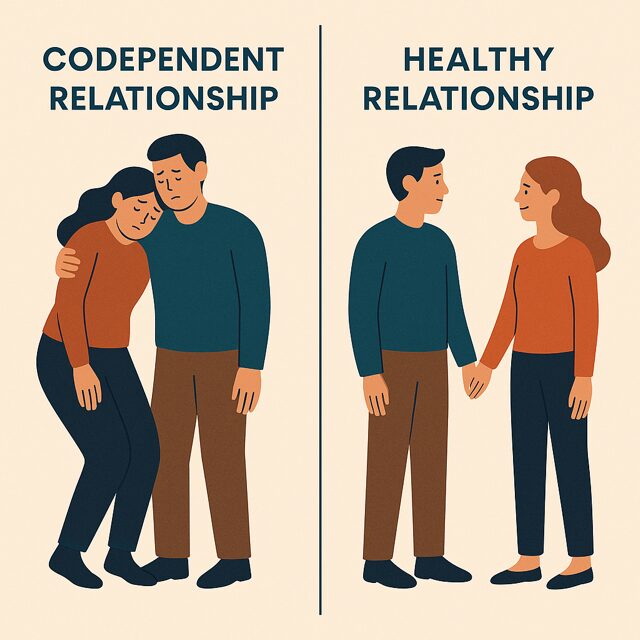
Codependency vs. Healthy Relationships: Understanding the Difference Between Support and Enmeshment

codependent-vs-healthy

Relationships are meant to be a source of support, joy, and mutual growth. But what happens when the line between caring and controlling gets blurry? Codependency often masquerades as love or devotion, but it can erode both partners’ sense of self. In contrast, healthy relationships are rooted in respect, autonomy, and balance. Here, I’ll explore …

How Is Your Attachment Style Affecting Your Relationship?

your-attachment-style

According to most psychological estimates, around 90-95% of our mental activity is considered subconscious, meaning only a small percentage (5-10%) is consciously accessible. Most of our daily decisions, habits, feelings, emotions and behaviours are driven by our subconscious mind. The subconscious stores a vast amount of information, including memories, beliefs, and learned patterns.  Which is …

Adult Children Of Addicts or Codependents – The Laundry List

adult-children-of-addict

  If you grew up in a home with a parent who misused alcohol, drugs, or who suffered from codependency themselves, you’re probably familiar with the feeling of never knowing what to expect from one day to the next. When one or both parents struggle with addiction, the home environment is unpredictable. Arguments, inconsistency, unreliability, …